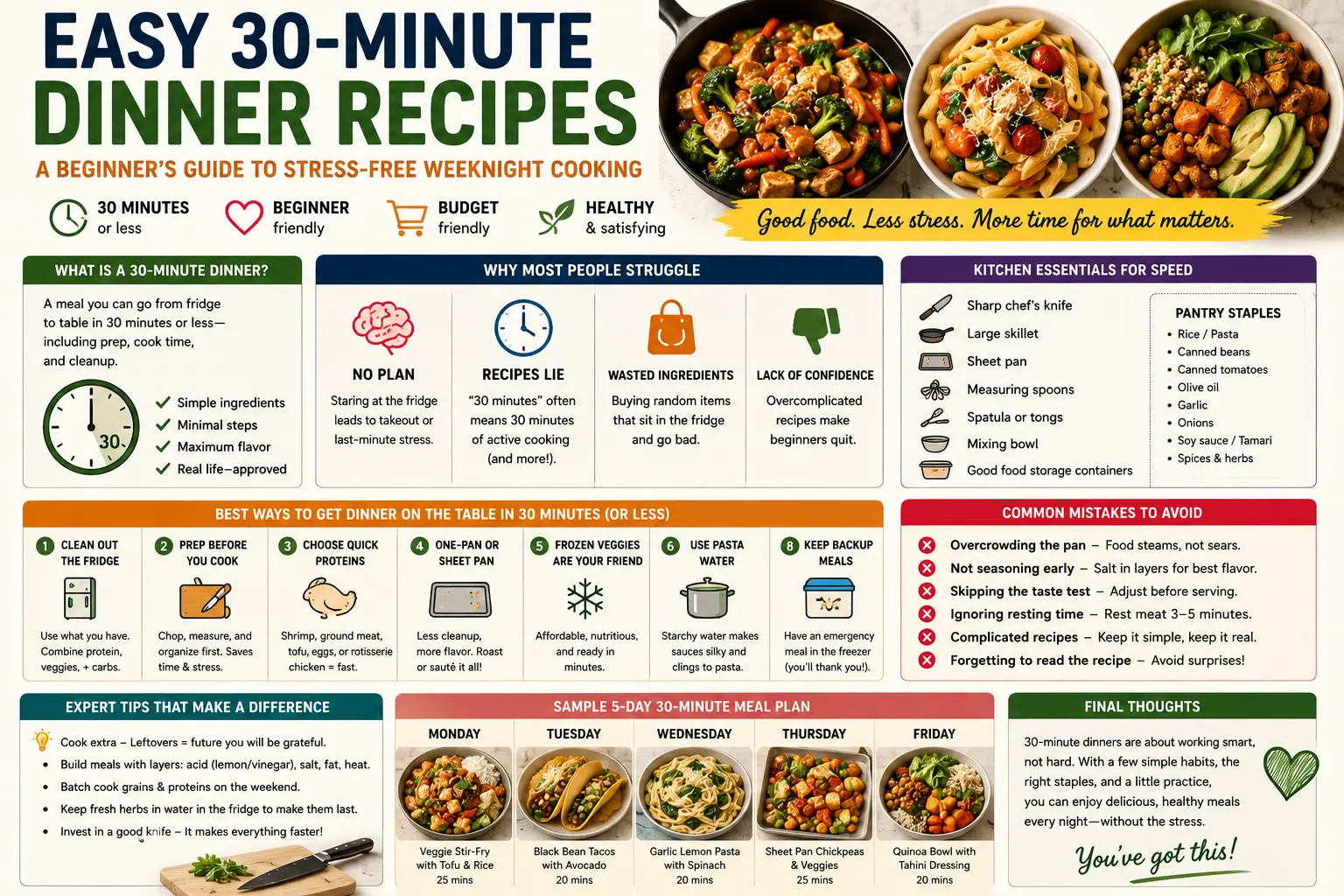
Easy 30 Minute Dinner Recipes: A Beginner’s Guide to Stress-Free Weeknight Cooking
Introduction
Let’s be honest: around 5 PM, the question “What’s for dinner?” can feel harder than it should. You open the refrigerator hoping for inspiration, only to find a few leftovers, half an onion, and a bell pepper that has seen better days.
I’ve been there more times than I’d like to admit.
After a long workday, helping with homework, running errands, or simply trying to find a few quiet minutes for yourself, preparing an elaborate meal is probably the last thing you want to do. And if you’re new to cooking, recipes with endless steps and unfamiliar ingredients can feel overwhelming before you even turn on the stove.
The good news is that dinner doesn’t have to be complicated.
You don’t need professional cooking skills, expensive equipment, or a pantry packed with specialty ingredients. What you need is a simple system that helps you turn everyday ingredients into a satisfying meal without spending your entire evening in the kitchen.
That’s where easy 30 minute dinner recipes come in.
The idea is simple: choose ingredients that cook quickly, keep versatile staples available, and use techniques that minimize both cooking and cleanup. With a little practice, you can have everything from stir-fries and skillet meals to pasta, quesadillas, and grain bowls on the table in about half an hour.
In this guide, we’ll look at what genuinely qualifies as a 30-minute dinner, why quick meals sometimes take longer than expected, and the practical habits that can make weeknight cooking much easier.
Let’s start with the basics.
What Exactly Counts as an Easy 30-Minute Dinner?
A true 30-minute dinner should not mean 30 minutes of cooking followed by another 30 minutes of chopping, waiting, and cleaning.
That defeats the whole purpose.
When we talk about a 30-minute meal, we’re talking about the entire process from gathering ingredients to serving dinner taking roughly half an hour. That means chopping, measuring, cooking, and finishing are all part of the time budget.
There should be no overnight marinade, lengthy dough-resting period, or hidden 45-minute roasting time.
Think of it as a meal designed around your schedule.
You walk into the kitchen, gather what you need, start prepping, and keep the cooking process moving. By the time you’re finished, dinner is ready instead of another chore waiting to happen.
For example, imagine you have ground turkey, a bell pepper, and a can of black beans. Add a few basic spices and tortillas, and you can turn those ingredients into a quick taco skillet in around 25 minutes.
That’s the idea behind this style of cooking.
The goal isn’t to create restaurant-level perfection every night. It’s to make something warm, flavorful, filling, and reasonably nutritious without unnecessary stress.
Good options include:
- Stir-fries
- One-pan skillet meals
- Quick pasta dishes
- Sheet-pan dinners
- Quesadillas
- Grain bowls
- Tacos
- Simple soups
- Egg-based meals
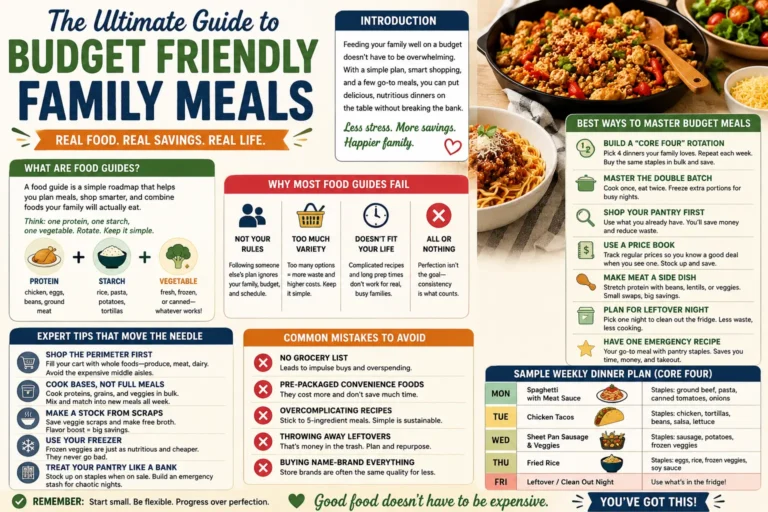
Once you understand the basic formula protein + vegetable + carbohydrate + seasoning or sauce you can create dozens of combinations without following a recipe word for word.
That flexibility is especially useful when you’re cooking with whatever happens to be in your refrigerator.
Why Most People Struggle With Quick Dinners
If getting dinner ready in 30 minutes sounds difficult, you’re not necessarily lacking cooking ability.
More often, the problem comes from a few predictable obstacles.
You Don’t Have a Plan
One of the biggest problems is simply not knowing what to make.
You come home hungry, open the refrigerator, and see several ingredients that could potentially become dinner but nothing that immediately looks like a meal.
That creates decision fatigue.
When you have to invent dinner from scratch every evening, even simple cooking can feel exhausting. Without a plan, it’s easy to reach for takeout before you’ve even started cooking.
A simple solution is to think in categories instead of individual recipes.
Ask yourself:
What protein do I have? What vegetable can I use? What carbohydrate can complete the meal? What sauce or seasoning will bring everything together?
That small mental checklist can turn random ingredients into dinner.
Recipes Often Underestimate Real Preparation Time
Another common frustration is discovering that a recipe advertised as “30 minutes” actually takes much longer.
The recipe may technically require 30 minutes of cooking, but that doesn’t always include washing vegetables, chopping ingredients, preheating the oven, or cleaning afterward.
This can be especially noticeable when you’re still developing your knife skills.
For beginners, a recipe that requires extensive chopping can take significantly longer than it does for an experienced cook.
That’s why genuinely quick recipes should rely on simple preparation and ingredients that cook quickly.
You Buy Ingredients You Only Use Once
Specialty ingredients can also make quick cooking more difficult.
You might buy fresh herbs, an unusual sauce, or an ingredient required for one specific recipe, use two tablespoons, and then forget about the rest.
Eventually, it gets pushed to the back of the refrigerator.
Instead, build your kitchen around versatile ingredients that can appear in several meals. Rice, pasta, tortillas, canned beans, frozen vegetables, eggs, canned tuna, and basic seasonings can be combined in countless ways.
That makes cooking more affordable and much less stressful.
Best Ways to Get Dinner on the Table in 30 Minutes
Cooking quickly isn’t about rushing through every step. It’s about removing unnecessary steps and making smart choices from the beginning.
Here are some practical strategies that can make a noticeable difference.
1. Start With a “Clean-Out-the-Fridge” Mindset
You don’t always need a specific recipe.
Some of the fastest dinners are created by combining ingredients you already have.
Why it works
Using what’s available reduces decision fatigue and eliminates the need for an extra grocery trip.
How to do it
Look for three basic components:
- Protein: chicken, eggs, tofu, beans, tuna, or cooked meat
- Vegetable: fresh, frozen, or canned
- Carbohydrate: rice, pasta, tortillas, potatoes, or bread
Then add a sauce, dressing, herbs, or spices.
Practical example
Have leftover rotisserie chicken, spinach, and tortillas?
Make chicken quesadillas and quickly sauté the spinach as a side.
No complicated recipe required.
Common mistake
Don’t try to turn every random ingredient into a gourmet creation. The goal is simply to make something tasty and satisfying.
2. Prep Everything Before Turning on the Heat
This simple habit can completely change the way you cook.
The French term mise en place essentially means putting everything in place before you begin.
Instead of chopping an onion while garlic is already sizzling in the pan, prepare everything first.
Why it works
Once the cooking starts, you can concentrate on the food instead of constantly switching between chopping, measuring, and stirring.
How to do it
Spend roughly five to seven minutes:
- Chopping vegetables
- Measuring spices
- Preparing sauces
- Opening cans
- Portioning proteins
Then start cooking.
Practical example
For a quick stir-fry, slice your peppers and broccoli and measure the soy sauce, ginger, and seasonings before heating your pan.
Once everything is ready, the actual cooking can move quickly.
Common mistake
Trying to prep while cooking often leads to burnt onions, overcooked garlic, or forgotten ingredients.
A few minutes of preparation upfront can save much more time later.
3. Choose Proteins That Cook Quickly
Some proteins are simply better suited to a 30-minute dinner than others.
Thin pork chops, shrimp, ground meat, eggs, tofu, and pre-cooked chicken can all get dinner moving quickly.
Why it works
Fast-cooking proteins reduce the amount of time your meal needs to spend on the stove.
How to do it
Keep a few options available in your refrigerator or freezer.
Frozen shrimp, for example, can be thawed relatively quickly in cold water. Ground turkey or beef can brown in just a few minutes, while rotisserie chicken requires little more than reheating.
Practical example
Sauté shrimp with garlic, lemon, and a little seasoning. Serve it with rice, pasta, or vegetables for a simple meal that comes together quickly.
Common mistake
Avoid overcrowding the skillet.
Too much food in one pan releases moisture and causes steaming instead of browning. If necessary, cook in batches.
4. Make One-Pan and Sheet-Pan Meals Your Best Friend
Fewer pans mean less work.
One-pan and sheet-pan meals are especially useful when you’re short on time because both the cooking and cleanup are simplified.
Why it works
Multiple ingredients can cook together while flavors combine in the same pan.
How to do it
For a sheet-pan meal, toss your protein and vegetables with oil and seasonings and spread them out across a baking sheet.
For a stovetop meal, cook the protein first, then add vegetables and sauce to the same skillet.
Practical example
Combine sausage, sliced bell peppers, and red onion on a sheet pan and roast until everything is cooked and lightly browned.
Common mistake
Don’t pile ingredients on top of each other.
Crowding prevents proper browning and can leave vegetables soft instead of roasted.
If necessary, divide the ingredients between two pans.
5. Keep Your Freezer Stocked
Your freezer can become one of your biggest allies when you’re trying to cook quickly.
Why it works
Frozen vegetables and other prepared ingredients can be stored for long periods and require little preparation.
Useful freezer staples include:
- Frozen diced onions
- Frozen spinach
- Mixed vegetables
- Frozen peas
- Cooked rice
- Cooked quinoa
- Frozen fish
- Frozen shrimp
- Pre-portioned cooked meat
Practical example
Forgot to buy onions?
Grab a handful of frozen diced onions and add them directly to your skillet.
Need vegetables quickly? Frozen spinach can disappear into pasta sauces, soups, and stir-fries within minutes.
Common mistake
Don’t assume frozen vegetables are automatically inferior to fresh ones. They can be a practical option, especially when fresh produce isn’t available or would otherwise go unused.
6. Put Pasta Water to Work
If you cook pasta regularly, don’t immediately pour all that cooking water down the sink.
The starchy water can help create smoother sauces.
Why it works
The starch helps sauces cling to pasta and can add body without relying heavily on cream or butter.
How to do it
Before draining your pasta, reserve about a cup of the cooking water.
Add a few tablespoons to your sauce while tossing the pasta.
Practical example
For a simple garlic-and-oil pasta, add a small amount of pasta water to the pan and toss everything together. The result can be noticeably silkier.
Common mistake
Remember to season the pasta water appropriately. Properly seasoned water gives the pasta flavor from the inside rather than relying entirely on the sauce.
7. Use No-Cook Sauces and Dressings
You don’t always need to simmer a sauce to make dinner flavorful.
A quick dressing can transform plain grains, vegetables, or protein in seconds.
Why it works
Acid, oil, herbs, and seasonings create contrast without requiring additional cooking time.
How to do it
Whisk together:
- Olive oil
- Lemon juice or vinegar
- Salt
- Dried herbs
- Garlic powder or fresh garlic
Then drizzle it over your finished meal.
Practical example
Toss roasted vegetables and quinoa with a quick lemon-herb dressing.
The fresh acidity can make a simple meal taste much brighter.
Common mistake
Don’t forget acidity.
Lemon juice or vinegar can balance richness and bring otherwise flat flavors to life.
Expert Tips That Can Make Quick Cooking Easier
The biggest improvements don’t always come from complicated techniques.
Sometimes, small habits make the biggest difference.
Season as You Go
Many beginner cooks wait until the very end to add salt.
Instead, season gradually throughout the cooking process.
Add a little seasoning when cooking vegetables and season your protein before it hits the pan. Then taste the dish near the end and make final adjustments.
This gives the food more developed flavor rather than simply making the finished dish taste salty.
Give Cooked Meat a Few Minutes to Rest
When you’re hungry, waiting can be difficult.
Still, giving cooked chicken, pork, or steak a few minutes to rest can help retain moisture when you cut into it.
Use those few minutes to plate your sides, clean your workspace, or prepare a quick sauce.
It’s a small pause that can improve the final result.
Use One Pan Whenever Practical
There’s no reason to dirty several pans if one skillet can do the job.
Cook your protein, remove it temporarily, then use the same pan for vegetables and sauce.
Those browned bits left behind from cooking can add considerable flavor when loosened with a little water or broth.
The result is better flavor and fewer dishes.
That’s a pretty good combination for a weeknight.
Keep an Emergency Meal in the Freezer
Even the most organized cook has bad days.
Maybe dinner gets delayed. Maybe you burn something. Maybe you simply don’t have the energy to start from scratch.
Having a homemade backup meal can save you from ordering takeout.
Good freezer options include:
- Chili
- Marinara sauce
- Taco meat
- Soup
- Bolognese
- Cooked grains
Make a double batch when you have time and freeze part of it for another evening.
Think of it as your kitchen emergency fund.
Taste Before You Serve
This is one of the easiest habits to develop.
Before plating dinner, taste a small portion and ask:
- Does it need salt?
- Is it too rich?
- Does it need acidity?
- Could it use more spice?
- Is anything missing?
Sometimes one squeeze of lemon or a pinch of chili flakes is enough to completely change a dish.
Don’t settle for “good enough” when a 30-second adjustment could make dinner significantly better.
Common Mistakes to Avoid
Even simple recipes can go wrong when a few basic habits are overlooked.
Mistake 1: Using a Dull Knife
Why it’s harmful
A dull knife makes chopping slower and can be harder to control.
The better approach
Keep your chef’s knife sharp and learn basic cutting techniques. Faster, cleaner chopping can save valuable preparation time.
Mistake 2: Overcrowding the Pan
Why it’s harmful
Too many ingredients release moisture and create steam rather than allowing food to brown properly.
The better approach
Give ingredients enough space. Cook in batches when necessary.
A crowded pan is rarely a fast pan.
Mistake 3: Adding All the Salt at the End
Why it’s harmful
Food can taste salty on the surface while remaining bland underneath.
The better approach
Season lightly throughout the cooking process, then taste and adjust before serving.
Mistake 4: Skipping the Recipe Read-Through
Why it’s harmful
You may discover halfway through cooking that something needs to be prepared separately or that a particular tool is required.
The better approach
Spend about a minute reading the entire recipe before starting.
Look for:
- Resting times
- Special equipment
- Ingredients that need preparation
- Steps that can happen simultaneously
That minute can prevent a lot of unnecessary stress.
Mistake 5: Starting With a Cold Pan
Why it’s harmful
Protein placed in a poorly heated pan can stick and may not develop the browned exterior that adds flavor.
The better approach
Allow the pan to heat before adding the cooking fat and protein. Once the food is in the pan, avoid constantly moving it around.
Mistake 6: Cutting Meat Immediately
Why it’s harmful
Cutting meat immediately can allow juices to escape before they redistribute.
The better approach
Give cooked meat a few minutes to rest before slicing.
Use that time to finish your vegetables or set the table.
Mistake 7: Skipping the Final Taste Test
Why it’s harmful
You may not discover that your meal needs more salt, acid, or seasoning until everyone is already sitting down.
The better approach
Take a final taste while the food is still in the pan.
A tiny adjustment can make a major difference.
Pros and Cons of Easy 30-Minute Dinners
Quick dinners offer plenty of benefits, but they aren’t perfect for every situation.
Here’s an honest look at both sides.
The Pros
Saves Time
A half-hour dinner gives you more time for family, exercise, hobbies, chores, or simply relaxing.
Reduces Takeout Temptation
When cooking feels manageable, ordering delivery becomes less tempting. You can also save money by using ingredients already in your kitchen.
Builds Confidence
For beginners, successfully preparing a meal from beginning to end is a powerful confidence boost.
Small wins make it easier to tackle more challenging recipes later.
Encourages More Home Cooking
Once you realize that cooking can be relatively quick, you may find yourself preparing meals at home more often.
Offers Flexibility
Many quick dinners can be adjusted based on the ingredients you already have.
That makes them practical rather than rigid.
The Cons
Some Dishes Simply Take Longer
Slow-cooked stews, braised meats, and elaborate roasts aren’t realistic 30-minute meals.
Some foods need time, and there’s no shortcut for everything.
Flavor Can Be Less Developed
A sauce that simmers for hours can develop a depth that’s difficult to reproduce in 20 minutes.
Quick cooking prioritizes convenience.
You Still Need Some Planning
A 30-minute dinner is much easier when you have basic ingredients available.
If your kitchen is completely empty, even the fastest recipe becomes difficult.
Meals Can Become Repetitive
If you rely on the same few proteins and cooking methods every night, meals can start feeling predictable.
Rotate seasonings, sauces, cuisines, and vegetables to keep things interesting.
Large Portions Can Take Longer
A recipe designed for four people may not remain a 30-minute meal when doubled.
Larger quantities may require multiple batches or additional cooking time.
Overall, however, the advantages make quick dinners extremely practical for busy weeknights.
The goal isn’t to cook perfectly.
It’s to make cooking consistently manageable.
Frequently Asked Questions
Can a complete beginner really make dinner in 30 minutes?
Absolutely.
Start with simple recipes involving a small number of ingredients and straightforward techniques such as sautéing, roasting, or simmering.
Read the recipe completely before starting and prepare your ingredients first.
With practice, your speed and confidence will naturally improve.
What if I’m missing an ingredient?
Don’t panic.
Many quick dinners are flexible enough to accommodate substitutions.
Swap vegetables for similar vegetables, chicken for another quick-cooking protein, or rice for pasta or another carbohydrate.
Just remember that cooking times can vary between ingredients.
How can I make a 30-minute dinner healthier?
Aim for a balanced plate.
Include a protein source, plenty of vegetables, and an appropriate portion of carbohydrates.
Use herbs, spices, citrus, and vinegar to build flavor instead of depending entirely on heavy sauces.
Are frozen vegetables suitable for quick dinners?
Yes.
They’re convenient, require little preparation, and can be useful when fresh produce isn’t available.
They’re particularly helpful for stir-fries, soups, pasta, and grain bowls.
Can I double a 30-minute recipe?
You can, but be careful about overcrowding your cookware.
If the skillet is too full, ingredients may steam instead of brown.
For larger quantities, use a larger pan or cook in batches.
What kitchen tools are most useful?
You don’t need a cabinet full of gadgets.
Three especially useful items are:
- A large skillet
- A sheet pan
- A sharp chef’s knife
Tongs, a spatula, and a microplane are helpful extras, but they aren’t essential.
How can I clean up faster?
Clean as you cook.
Rinse utensils while food is simmering, wipe down surfaces between steps, and use one pan whenever practical.
You can also fill the sink with warm soapy water and place used utensils there as you go.
By the time dinner is ready, much of the cleanup may already be finished.
Are canned beans useful for 30-minute meals?
Definitely.
Canned beans are already cooked and can quickly add protein, fiber, and substance to a meal.
Drain and rinse them before using, then add them to tacos, soups, grain bowls, pasta, or skillet dishes.
Why does my dinner always take longer than the recipe says?
Your cooking speed may simply still be developing.
Other common reasons include:
- Insufficient pan heat
- Overcrowded cookware
- Slow chopping
- Ingredients that require more preparation than expected
As your knife skills and kitchen organization improve, your overall cooking time should become more predictable.
What if I have a food allergy?
Choose substitutions that suit your dietary needs while preserving the basic structure of the meal.
For example, dairy-free alternatives can replace dairy ingredients, seeds can sometimes replace nuts, and gluten-free pasta or suitable sauces can replace wheat-based ingredients.
Always check ingredient labels carefully when managing an allergy.
Final Thoughts: Dinner Doesn’t Have to Be Complicated
After a long day, cooking dinner can easily feel like another item on an already crowded to-do list.
But it doesn’t have to.
The key to successful easy 30 minute dinner recipes isn’t complicated culinary knowledge. It’s having a simple strategy that makes weeknight cooking predictable.
Keep versatile ingredients around. Choose proteins that cook quickly. Prep everything before turning on the heat. Use one-pan meals whenever possible. Don’t overcrowd your cookware, and remember to taste your food before it reaches the table.
Most importantly, give yourself permission to keep things simple.
Your dinner doesn’t need to look like something from a restaurant. It just needs to taste good, satisfy you, and fit into your actual life.
You’ll make mistakes along the way. A sauce might be too salty. A vegetable might get overcooked. Maybe dinner takes 35 minutes instead of 30.
That’s okay.
Every meal teaches you something.
Start with one simple recipe this week. Get comfortable with the process, then experiment with different proteins, vegetables, sauces, and seasonings.
Before long, that dreaded 5 PM question “What am I making for dinner?” won’t feel nearly as intimidating.
You’ll open the refrigerator, look at what you have, and know exactly what to do.
And that’s when quick weeknight cooking starts to feel less like a chore and more like a skill you genuinely own.