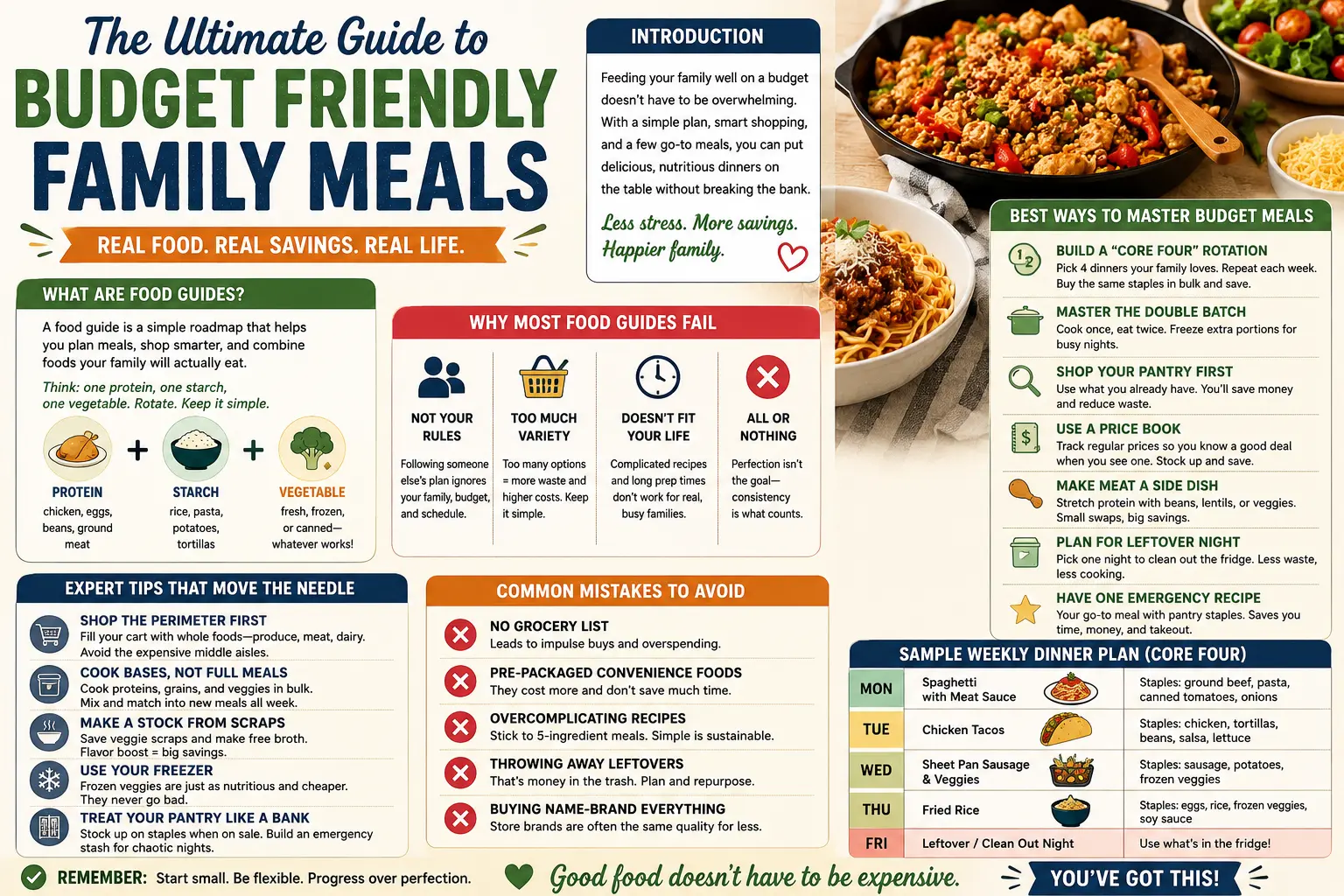
The Ultimate Guide to Budget Friendly Family Meals
Introduction
Let’s be honest: is there anything more stressful than standing at the grocery checkout, watching the total climb higher and higher while wondering whether your card will actually go through?
I’ve been there. You walk into the store intending to buy only the basics milk, bread, chicken, fruit and somehow the final bill looks like a car payment. Then you remember that there are hungry kids waiting at home, someone will probably complain that dinner is boring, and there’s always the temptation to order pizza.
Keeping a family fed, reasonably healthy, and happy while staying within a grocery budget can feel like a full-time job.
But here’s the good news: budget friendly family meals don’t require expensive superfoods, gourmet ingredients, or complicated recipes. You also don’t have to spend your entire weekend preparing dozens of identical meals.
The real solution is much simpler.
You need a practical system that helps you buy ingredients intentionally, use what you already have, minimize waste, and prepare meals your family will actually eat.
That’s what this guide is about.
Before getting into grocery lists and meal ideas, though, there’s an important piece to understand first: the way you think about meal planning matters just as much as the recipes themselves.
What Is a Food Guide, Really?
When you hear “food guide,” you might imagine government nutrition charts, colorful food pyramids, or complicated diagrams showing exactly what you’re supposed to eat.
Forget all of that for a moment.
For this guide, a food guide is simply a flexible roadmap for your meals.
It’s there to answer one of the most common household questions:
“What are we having for dinner tonight?”
A useful food guide doesn’t need to be strict. It doesn’t need to be perfect. Most importantly, it needs to fit your family’s preferences, schedule, cooking ability, and budget.
Think about it like planning a road trip.
You don’t necessarily need directions for every single turn before leaving your driveway. You just need to know where you’re starting, where you’re going, and which major routes will get you there.
Meal planning works in much the same way.
For example, a simple family meal framework could be:
- One protein at dinner
- One affordable starch
- One vegetable
- Rotate between chicken, eggs, beans, and other inexpensive proteins
- Use rice, pasta, or potatoes for starches
- Choose fresh or frozen vegetables based on price and convenience
That’s enough.
You don’t need to count calories or measure every ingredient. You simply need a structure that removes some of the stress from mealtime while helping keep your grocery spending under control.
Why Many Food Guides Fail
Before creating a system that works, it’s worth understanding why so many meal plans don’t last.
The problem often isn’t the food itself.
It’s that the plan was never designed for the family using it.
You’re Following Someone Else’s Rules
One of the easiest mistakes is copying a meal plan created for a completely different household.
Maybe it’s written by a fitness influencer who uses ingredients like quinoa flour and nutritional yeast. Or perhaps it’s designed for a family with teenagers who happily eat everything while your toddler refuses anything that isn’t familiar.
A meal plan can look fantastic online and still be completely impractical for your home.
If it requires expensive specialty ingredients, excessive preparation time, or foods nobody likes, you’ll probably abandon it.
Example
Suppose a friend loves Taco Tuesday using grass-fed beef, organic sour cream, and fresh avocados.
That’s perfectly fine for her household.
But you could make a similar meal using ground turkey on sale, store-brand seasoning, tortillas, beans, and whichever toppings your family enjoys.
The meal can still be satisfying while costing considerably less.
The lesson is simple: your meal plan should fit your family not the other way around.
You Don’t Need Endless Variety
Many meal plans make variety sound mandatory.
You might see recommendations to serve shrimp one night, salmon the next, followed by steak, pork chops, and lamb.
For a family on a budget, that approach can become expensive very quickly.
Buying too many different proteins and fresh ingredients also increases the chances of food going unused.
Instead, simplify.
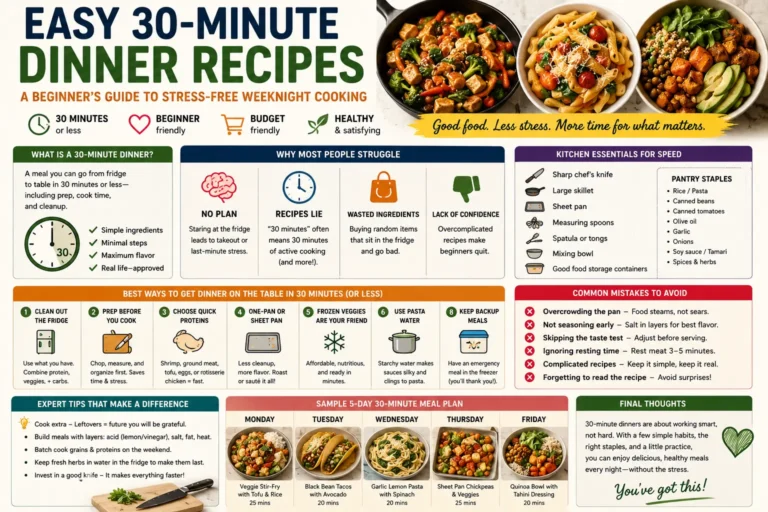
Choose three or four reliable meals that your family enjoys and rotate them regularly.
Repeating meals isn’t a failure. It can actually make grocery shopping easier, reduce waste, and lower your food bill.
You’re Ignoring Your Kitchen and Schedule
A meal plan can look wonderful on paper and still collapse in real life.
Maybe you don’t own a slow cooker. Perhaps you have one baking tray. Or maybe you don’t arrive home until 6 p.m. and simply don’t have the energy to spend 45 minutes chopping vegetables.
Some meal plans assume unlimited time, equipment, and cooking experience.
Real families don’t always work that way.
Example
A recipe may tell you to roast sweet potatoes for 30 minutes.
But you’re home late, the kids are hungry, and you forgot to preheat the oven.
Instead of abandoning dinner and ordering takeout, adapt the recipe. Cut the potatoes into small pieces and sauté them in a covered pan on the stovetop.
The best food guide adapts to your life.
You Treat Meal Planning Like a Diet
Another common problem is an all-or-nothing mindset.
You decide you’re going to follow your meal plan perfectly for seven days. Then Wednesday arrives, you’ve had a terrible day, and you order pizza.
Suddenly, you decide the entire plan has failed.
It hasn’t.
Consistency is more valuable than perfection.
If you successfully prepare four planned dinners out of seven, that’s progress. Next week, you might manage five.
A food guide should make life easier not become another source of guilt.
Best Ways to Master Budget-Friendly Family Meals
Now for the practical part.
Forget complicated spreadsheets and color-coded meal calendars.
The following strategies are designed to work in ordinary households where people are busy, budgets matter, and nobody wants to spend their entire weekend cooking.
You don’t have to implement everything immediately.
Start with two or three ideas and build your system gradually.
1. Create a “Core Four” Dinner Rotation
Instead of trying to invent 20 different dinners every month, choose four affordable meals your family already enjoys.
The trick is to choose meals that share ingredients.
For example, your rotation might include:
- Spaghetti with meat sauce
- Chicken tacos
- Sheet-pan sausage and vegetables
- Egg fried rice
The grocery list becomes much simpler:
- Ground meat
- Chicken
- Sausage
- Eggs
- Rice
- Pasta
- Tortillas
- Onions
- Bell peppers
- Frozen vegetables
That’s it.
Why It Works
Buying familiar ingredients in larger quantities can reduce waste and help you take advantage of better prices.
It also removes the daily question of what to cook.
Common Mistake
Don’t make all four meals nearly identical.
Aim for different flavors and textures. You could have one saucy meal, one crispy meal, one stir-fry, and one soup or casserole.
2. Master the Double Batch
Whenever you’re cooking a meal that freezes well, consider making twice as much.
Eat one portion tonight and freeze the other.
This works particularly well for:
- Chili
- Pasta sauce
- Soups
- Stews
- Casseroles
- Cooked beans
The extra work is usually minimal because the stove and cookware are already in use.
Example
You make a large pot of chili.
One portion becomes dinner. The second goes into a labeled freezer container.
A couple of weeks later, you’re exhausted on a Wednesday evening. Instead of ordering delivery, you thaw the chili and have dinner ready within minutes.
Common Mistake
Always label frozen containers.
After a few weeks, frozen chili and pasta sauce can look remarkably similar.
Write down the meal name and date before putting it in the freezer.
3. Shop Your Pantry Before the Grocery Store
Before creating a grocery list, check your kitchen.
Look inside:
- Pantry cabinets
- Refrigerator
- Freezer
You might already have enough ingredients for several meals.
That half-used bag of rice doesn’t need another companion. The canned beans you’ve forgotten about can become part of dinner.
Example
Suppose you find pasta, canned tomatoes, frozen spinach, garlic, and olive oil.
You already have the foundation for a simple pasta dinner without making another grocery trip.
Why It Helps
Shopping your own kitchen first reduces duplicate purchases and helps you use food before it expires.
4. Keep a Simple Price Book
A price book doesn’t need to be complicated.
It can simply be a list of the normal prices for the staples you buy regularly.
Track things such as:
- Chicken
- Ground meat
- Rice
- Pasta
- Canned tomatoes
- Eggs
- Frozen vegetables
- Cheese
Over time, you’ll recognize what a genuinely good price looks like.
If chicken usually costs $3.50 per pound and suddenly drops to $1.99, you know that’s worth considering.
Why It Works
Stores frequently advertise discounts, but an advertised “sale” isn’t automatically a bargain.
Knowing your usual prices makes it easier to recognize genuine savings.
5. Make Meat Part of the Meal Instead of the Entire Meal
Meat can be one of the most expensive parts of a grocery bill.
Instead of making a large portion of meat the centerpiece of every dinner, use smaller amounts alongside affordable ingredients.
For example, ground beef can be combined with:
- Beans
- Lentils
- Vegetables
- Rice
- Pasta
Example
For taco night, use half a pound of ground beef combined with a can of black beans.
Season everything together and serve it with tortillas and toppings.
You still get a filling meal, but the meat stretches much further.
Common Mistake
Don’t make the transition extreme.
You don’t need to eliminate meat overnight.
Small changes are easier for families to accept.
6. Schedule a Leftover Night
Choose one evening each week as your “leftover night.”
Thursday can work well.
Instead of cooking something completely new, use what is already in the refrigerator.
You can:
- Reheat leftovers
- Make fried rice
- Create omelets or frittatas
- Assemble sandwiches
- Build snack plates
- Turn leftover meat into tacos
Why It Works
This saves money and gives you a break from cooking.
It also prevents small portions from being forgotten until they eventually end up in the trash.
7. Have an Emergency Meal Ready
Every household should have at least one inexpensive meal that can be prepared when everything goes wrong.
Maybe you have no fresh groceries.
Maybe you’re exhausted.
Maybe you simply forgot to plan.
Your emergency meal could be:
- Eggs and rice
- Beans on toast
- Pasta with garlic and olive oil
- Tuna pasta
- Peanut butter sandwiches with fruit
Why It Matters
A reliable emergency meal can stop an inconvenient evening from turning into a $30 takeout order.
Just make sure your family actually likes it.
Test it on a normal evening before declaring it your official backup dinner.
Expert Tips That Can Make a Real Difference
Once you’ve mastered the basics, there are several less obvious strategies that can make budget-friendly family meals even easier.
Stop Starting Your Shopping Trip in the Middle Aisles
Many shoppers walk into a supermarket and immediately begin wandering through every aisle.
That’s a recipe for impulse purchases.
Instead, start by focusing on the foods you actually need to build meals.
Depending on the store, this may include:
- Produce
- Meat
- Eggs
- Dairy
- Frozen vegetables
Then visit the middle aisles for specific staples such as:
- Rice
- Pasta
- Beans
- Canned tomatoes
- Flour
- Spices
Example
A family spending heavily on packaged snacks might replace some granola bars, crackers, and chips with larger quantities of apples, yogurt, and peanut butter.
The result can be fewer snack purchases and a more versatile collection of ingredients.
Cook Components Instead of Complete Meals
Traditional meal prep often involves cooking five complete meals in advance.
That can become boring quickly.
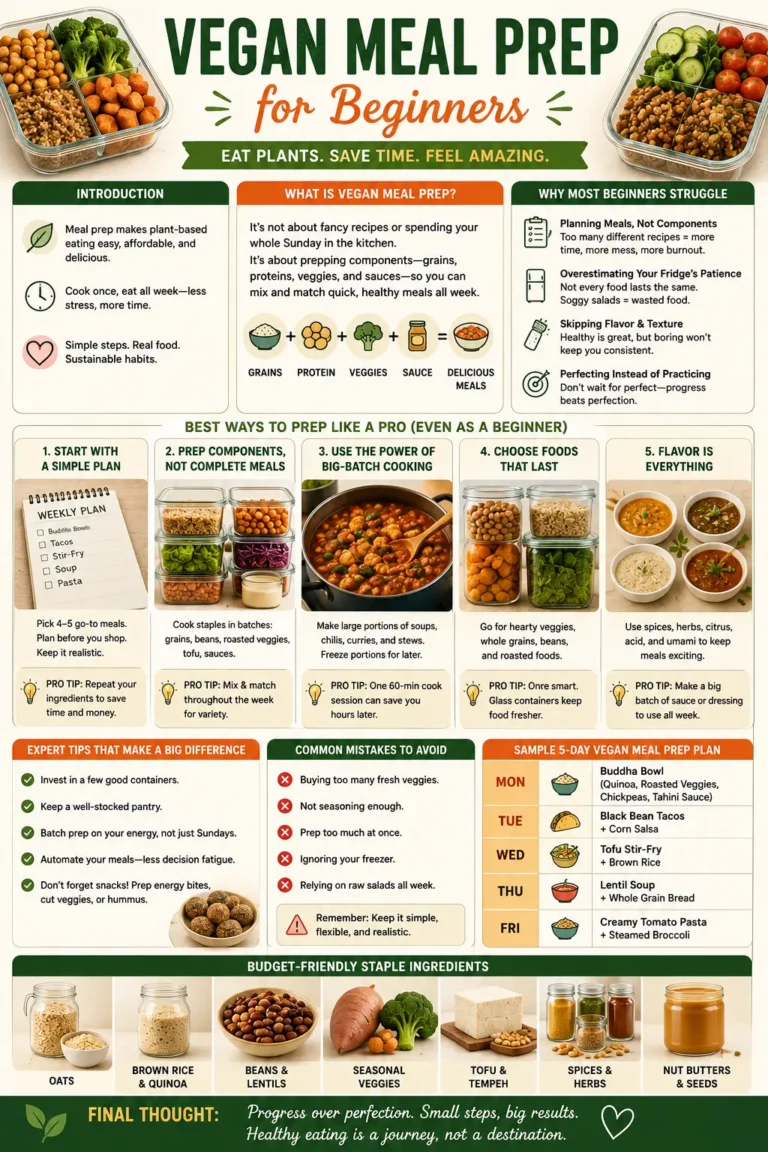
A more flexible approach is to prepare base ingredients.
For example, cook a large batch of chicken, rice, or roasted vegetables.
Then use those ingredients differently throughout the week.
Example
Cook several pounds of seasoned chicken at the beginning of the week.
You can turn it into:
- A salad
- Pasta
- Tacos
- Rice bowls
- Sandwiches
You’re cooking once but creating several different meals.
This provides variety without requiring you to start from scratch every night.
Try a Vegetable Scrap Bowl
Here’s a simple way to get more value from your ingredients.
While cooking, collect suitable vegetable scraps such as:
- Onion ends
- Carrot tops
- Celery pieces
- Garlic skins
- Mushroom stems
Place them in a container or bowl.
You can use suitable scraps to make homemade vegetable stock, provided they are clean and appropriate for cooking.
The stock can become the foundation for:
- Soups
- Stews
- Rice
- Sauces
It’s a simple way to get additional value from food that might otherwise be discarded.
Don’t Ignore Frozen Vegetables
Frozen vegetables are extremely useful for budget-conscious families.
They’re convenient, easy to portion, and don’t spoil quickly.
Consider keeping staples such as:
- Peas
- Corn
- Spinach
- Broccoli
- Mixed vegetables
- Green beans
on hand.
They can be steamed, sautéed, roasted, or added directly to soups and stir-fries.
The convenience can also reduce the temptation to order takeout simply because you don’t have fresh vegetables available.
Treat Your Pantry Like a Food Savings Account
A well-stocked pantry can function as a small emergency fund for meals.
When staples are reasonably priced, you can gradually build a reserve of items such as:
- Rice
- Pasta
- Beans
- Canned tomatoes
- Shelf-stable sauces
- Other family favorites
The goal isn’t to buy random canned foods just because they’re on sale.
Build a collection of ingredients that work together in meals your family already enjoys.
For example, an emergency shelf might contain pasta, tomato sauce, beans, and a few other ingredients that can quickly become dinner.
Common Mistakes to Avoid
Even the best intentions can disappear at the grocery store or during a busy week.
Here are some of the biggest mistakes to watch for.
Mistake 1: Grocery Shopping Without a List
Walking into a grocery store without a plan makes impulse spending much easier.
Promotional displays, snacks, and “special deals” can quickly find their way into your cart.
Better Approach
Keep a running grocery list on your phone.
Whenever you finish a staple or realize you’re missing an ingredient, add it immediately.
Before shopping, check your pantry, refrigerator, and freezer.
Then stick to your list as closely as practical.
Mistake 2: Buying Too Many Convenience Foods
Pre-cut vegetables, shredded cheese, salad kits, and marinated meats can be convenient, but that convenience often comes with a higher price.
When possible, compare the cost of whole ingredients with prepared versions.
Buying a block of cheese instead of pre-shredded cheese or whole onions instead of pre-chopped ones can sometimes reduce your grocery costs.
You don’t need to prepare absolutely everything from scratch, though.
The goal is to find the right balance between cost and convenience.
Mistake 3: Making Recipes Too Complicated
A recipe with 12 ingredients may look exciting online.
But if half of those ingredients are things you’ll never use again, the recipe can become expensive and frustrating.
When you’re starting out, focus on simple meals.
For example:
- Pasta with garlic and olive oil
- Rice and beans
- Baked chicken with vegetables
- Simple omelets
- Pasta with tomato sauce
Once you’re comfortable, add complexity gradually.
Mistake 4: Throwing Away Leftovers
Wasted food is wasted money.
You paid for the ingredients, spent time preparing them, and then received no value from the food that ended up in the trash.
Instead, plan how leftovers will be used.
Turn leftover chicken into sandwiches or tacos. Add leftover vegetables to eggs. Use cooked rice for fried rice.
The goal is to make leftovers feel like ingredients rather than unwanted repeats.
Mistake 5: Buying Name Brands Automatically
Brand loyalty can quietly increase your grocery bill.
Store-brand products are often worth trying for staples such as:
- Rice
- Pasta
- Flour
- Sugar
- Canned goods
- Spices
Compare products and see which ones work for your family.
You can continue buying name brands for the items where you genuinely prefer the quality or taste.
Pros and Cons of Using Food Guides
A food guide can be incredibly useful, but it isn’t perfect.
Understanding both the advantages and limitations can help you build a system you’ll actually maintain.
Benefits
Reduces Decision Fatigue
Instead of asking yourself every afternoon what to cook, you already have a general plan.
That leaves more mental energy for everything else going on in your life.
Helps Control Grocery Spending
A plan makes grocery shopping more intentional.
You’re more likely to buy ingredients you need rather than filling the cart with random extras.
Reduces Food Waste
When you know how ingredients will be used, you’re less likely to buy food that sits forgotten in the refrigerator.
Builds Cooking Confidence
Beginners often feel overwhelmed by cooking.
Repeating simple meals gives you practice and helps basic techniques become automatic.
Creates Predictable Family Routines
Families with children often benefit from predictable routines.
Knowing roughly what dinner will look like can make evenings feel less chaotic.
Drawbacks
Meals Can Become Repetitive
If you use the same rotation without changing anything, your family may eventually get bored.
Schedules Can Change
A meal plan can’t predict every late meeting, sick child, unexpected guest, or emergency.
Setup Takes Time
Creating a system that genuinely fits your family requires some trial and error.
Too Much Structure Can Create Guilt
A food guide should provide direction, not become a strict contract.
Changing dinner plans doesn’t mean you’ve failed.
Generic Plans May Not Fit Every Family
Allergies, dietary restrictions, cultural preferences, and personal tastes can make generic meal plans less useful.
Customization is often necessary.
The Bottom Line
A food guide isn’t a magical solution.
It’s simply a tool.
Think of it as a map rather than a set of commands. You can change the route when your schedule changes. You can swap ingredients when prices rise. You can skip a meal when life gets busy.
The families that make these systems work aren’t necessarily following every rule perfectly.
They’re using the parts that help and adjusting the rest.
The goal isn’t to create a flawless meal-planning system.
The goal is simply to make feeding your family more affordable, predictable, and manageable.
Frequently Asked Questions About Food Guides
Are Food Guides Only for People Trying to Lose Weight?
No.
A food guide can serve many purposes beyond weight management.
It can help families plan meals, control grocery spending, reduce food waste, and make cooking less stressful.
A budget-friendly food guide is primarily about practicality and organization, not dieting.
How Can I Get Picky Kids to Accept a New Meal Plan?
Start slowly.
Don’t replace every familiar meal at once.
Instead, introduce one new dinner each week while continuing to serve two or three meals your children already enjoy.
You can also involve children in simple decisions.
Let them choose a vegetable at the grocery store or help with age-appropriate preparation.
If they reject a new food, don’t turn dinner into a battle.
Try again another time.
Repeated exposure without pressure can help children become more familiar with new foods.
Can I Use a Food Guide With Allergies or Dietary Restrictions?
Yes, but customization is important.
The basic structure can remain the same:
protein + starch + vegetable
You simply replace ingredients with options that suit your household.
For example, depending on the restriction, dairy ingredients might be replaced with suitable alternatives, while gluten-containing starches could be replaced with rice, potatoes, or other appropriate choices.
Always choose ingredients that are safe for the specific dietary restriction involved.
How Much Time Should Meal Planning Take Each Week?
Beginners can start with approximately 20 to 30 minutes once a week.
Use that time to:
- Check the pantry and refrigerator.
- Choose your meals.
- Review what you already have.
- Create your grocery list.
Once the routine becomes familiar, the process may take considerably less time.
Choose a consistent planning day so it becomes a habit.
What If I Don’t Have a Large Freezer?
That’s not a problem.
You don’t need a chest freezer to make budget-friendly meals work.
Instead of freezing large batches, simply cook an extra portion for lunch the next day.
You can also repurpose leftovers into different meals.
For example:
- Roasted chicken → tacos
- Cooked rice → fried rice
- Leftover vegetables → omelet
This allows you to use leftovers before they become a storage problem.
Is Cooking From Scratch Every Night Always Cheaper?
Not necessarily.
Cooking at home is often less expensive than restaurant meals or frequent takeout, but time and energy also matter.
Using convenient ingredients such as canned beans, frozen vegetables, or prepared proteins can sometimes make sense if they help you avoid expensive takeout.
The goal isn’t perfection.
Some nights you’ll cook from scratch. Other nights you’ll assemble a quick meal.
Both approaches can fit into a sensible budget.
How Do I Stay Motivated When My Meal Plan Falls Apart?
Don’t wait until the following week to start again.
If you miss one planned dinner, simply continue with the next meal.
One unplanned takeout order doesn’t erase the rest of your progress.
The biggest mistake is turning one bad evening into an entire bad week.
Remember: consistency matters more than perfection.
Do I Need Special Kitchen Equipment?
No.
A basic kitchen can handle most everyday meals.
A skillet, medium pot, baking sheet, and good knife are enough to get started.
You don’t need to buy an air fryer, slow cooker, food processor, or collection of specialized gadgets before learning the basics.
Add equipment only when it solves a genuine problem for your household.
How Do I Know How Much Food to Cook?
Start with rough portions and adjust according to your family’s appetite.
The source guide suggests approximately:
- Half a pound of protein per adult
- One cup of cooked starch per person
- One to two cups of vegetables per person
Children will generally need smaller portions.
After a few weeks, you’ll learn your family’s actual needs.
If you make too much, that’s not necessarily a problem it can become tomorrow’s lunch.
Can a Food Guide Really Save Money Over the Long Term?
Yes, but don’t expect your grocery bill to suddenly drop by half.
The savings usually come from eliminating small leaks such as:
- Impulse purchases
- Food waste
- Duplicate grocery purchases
- Last-minute takeout
- Unused specialty ingredients
Those small changes can add up over time.
The financial benefit is only part of the payoff. Having a reliable meal system can also provide more peace of mind and reduce the stress surrounding dinner.
Putting It All Together
Let’s step back for a moment.
The central idea behind budget-friendly family meals is surprisingly simple.
You don’t need gourmet cooking skills.
You don’t need an expensive kitchen.
You don’t need a complicated meal-prep spreadsheet.
You need a system that matches your family’s actual life.
Start by treating food guides as flexible roadmaps rather than strict rules.
Build a small rotation of meals your family genuinely enjoys. Look for overlapping ingredients. Cook extra when practical. Shop your pantry before heading to the store. Use frozen vegetables and affordable staples. Keep an emergency meal available for chaotic evenings.
Most importantly, don’t try to change everything at once.
Choose one or two strategies and start there.
Maybe this week you’ll create a grocery list and stick to it.
Maybe you’ll double your next batch of chili and freeze half.
Maybe you’ll designate one night as leftover night.
Whatever you choose, take the first step.
A successful meal-planning system isn’t the one that looks perfect on paper.
It’s the one that helps you feed your family well, spend your money intentionally, waste less food, and make dinner feel a little easier.
You don’t have to master everything today.
Start with one simple change, repeat it until it becomes natural, and build from there.
Your kitchen and your grocery budget will benefit from it.