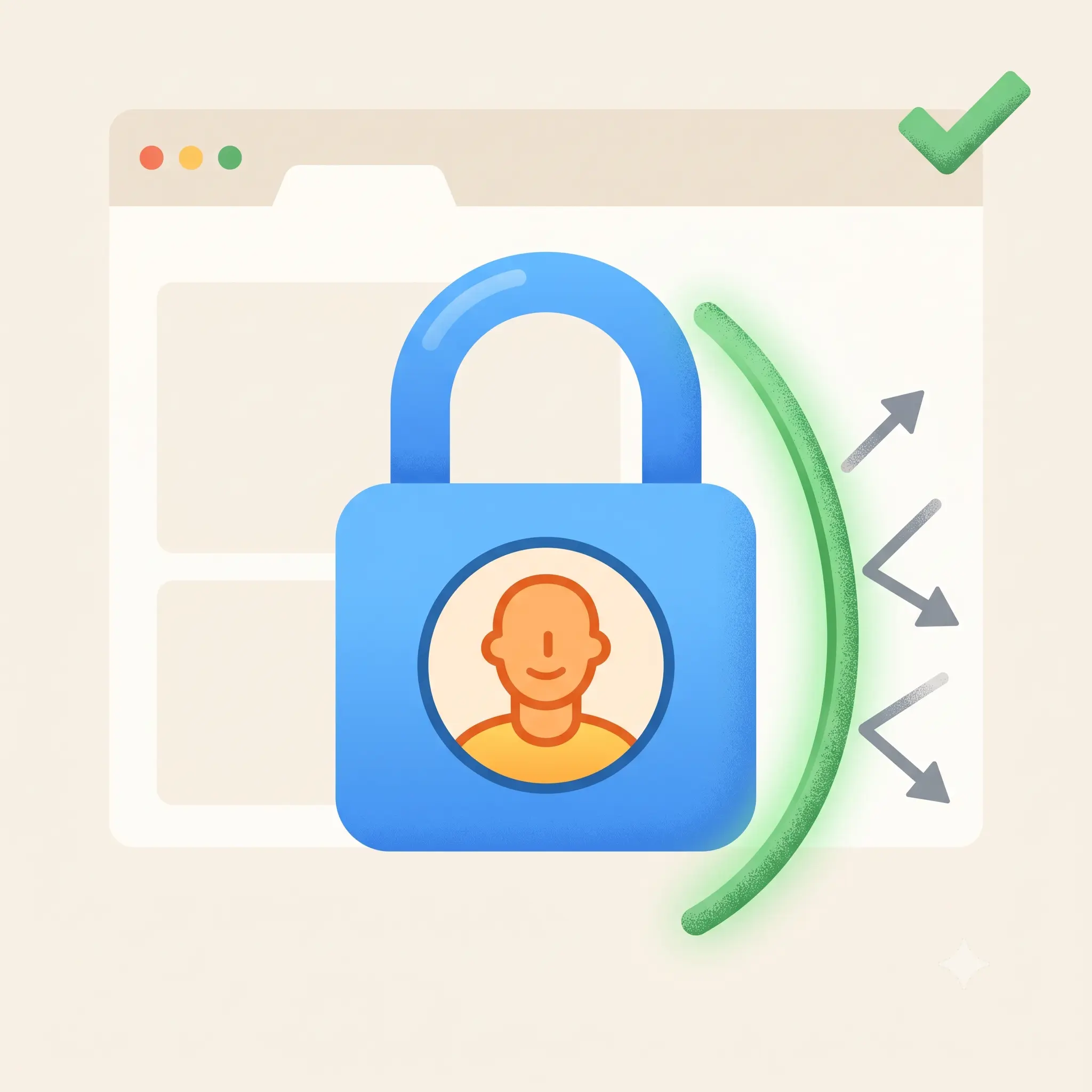
Imagine walking out of your house, leaving the front door wide open, your personal diary resting on the porch, and your bank statements taped to the windows. That sounds crazy in the real world, but millions of people do the exact same thing every day on the internet without realizing it.
Whether it’s creepy targeted ads following you from site to site, endless spam emails flooding your inbox, or the terrifying thought of a scammer stealing your identity, our digital lives are constantly exposed. You might think nobody cares about your data, but to advertisers, data brokers, and cybercriminals, your personal information is a goldmine. Figuring out exactly how to protect online privacy might feel overwhelming at first, especially with technology changing so fast.
Don’t worry, though. You don’t need a computer science degree to lock down your digital life. Let’s break down exactly what’s at stake and how you can take back control of your personal information today.
What Does It Mean to Protect Your Online Privacy?
At its core, protecting your online privacy is just about deciding who gets to see your personal information and what they are allowed to do with it. Every time you browse the web, use a smartphone app, or post on social media, you leave behind a digital footprint. Privacy protection is the act of shrinking that footprint.
Think of it like closing the curtains in your living room. You aren’t doing anything illegal or hiding a dark secret; you just don’t want strangers looking into your window while you’re eating dinner or watching TV. Online privacy is the digital version of those curtains.
It blocks internet service providers, tech companies, and cybercriminals from tracking every website you visit, every item you buy, and every message you send. When you take steps to secure your digital life, you are simply building a virtual fence around your personal space, keeping unwanted snoops out and ensuring your private life stays private.
What Causes Your Online Privacy to Be Compromised?
Before we can fix the problem, we need to understand how our data gets out there in the first place. Here are the most common ways your privacy gets compromised.
Reckless Social Media Sharing
We love sharing our lives online, but oversharing is a massive privacy killer. For example, posting a photo of your boarding pass before a vacation might seem harmless. However, that pass contains a barcode that holds your frequent flyer number, full name, and booking reference—giving a clever hacker enough info to access your airline account or even cancel your flight.
“Free” Apps and Services
There is an old saying in the tech world: If you aren’t paying for the product, you are the product. Many free games, flashlight apps, or budget trackers make their money by collecting your data and selling it to advertisers. If a simple calculator app asks for permission to access your location and microphone, it’s collecting data it absolutely does not need to function.
Unsecured Public Wi-Fi Networks
Logging into your bank account while sipping a latte at the local coffee shop is convenient, but it’s also dangerous. Public Wi-Fi networks are often unencrypted. This means a hacker sitting a few tables away with the right software can intercept the data traveling between your device and the router, easily scooping up your passwords and sensitive information.
Corporate Data Breaches
Sometimes, your privacy is compromised through no fault of your own. You might have a perfectly secure password, but if the massive company storing your data gets hacked, your information gets leaked onto the dark web. This is a leading cause of exposed email addresses, passwords, and credit card numbers.
Best Ways to Secure Your Digital Identity
Taking control of your digital life is easier than you think. Here are the most effective, actionable steps you can take to lock down your personal data.
1. Start Using a Password Manager
The days of using “Password123!” for every website are over. Reusing passwords is the single biggest mistake people make online. If one site gets hacked, criminals will try that same password on your email and bank accounts.
Why it works: A password manager (like Bitwarden or 1Password) acts as a digital vault. It generates complex, uncrackable passwords (like x7&Kj9!mP2q) for every single site you use and remembers them for you. You only have to remember one “Master Password” to unlock the vault.
2. Turn On Two-Factor Authentication (2FA)
If a hacker manages to steal your password, 2FA stops them dead in their tracks.
Why it works: Two-factor authentication requires a second piece of proof that you are who you say you are—usually a temporary code sent to your phone. Even with your password, a hacker can’t log in unless they also physically possess your smartphone.
Pro-tip: Whenever possible, use an authenticator app (like Google Authenticator or Authy) instead of text messages, as SMS messages can be intercepted.
3. Review App Permissions on Your Phone
Your phone knows everything about you. It’s time to limit what your apps know.
Why it works: By going into your phone’s settings, you can see exactly which apps have access to your camera, microphone, location, and contacts. If a recipe app has access to your location at all times, revoke that permission. Only grant permissions to apps while they are actively in use.
4. Use a Virtual Private Network (VPN) on Public Wi-Fi
If you travel or work from coffee shops, a VPN is non-negotiable.
Why it works: A VPN scrambles all the data leaving your phone or laptop. If a hacker is snooping on the airport Wi-Fi, all they will see is a stream of unreadable gibberish instead of your emails and passwords.
5. Switch to a Privacy-Focused Browser and Search Engine
Mainstream browsers and search engines are built to track your behavior and serve you ads.
Why it works: Browsers like Brave or Mozilla Firefox have built-in trackers blockers. Pairing them with a search engine like DuckDuckGo—which doesn’t log your search queries—drastically reduces the amount of targeted ads following you around the web.
6. Freeze Your Credit
This is the ultimate defense against identity theft.
Why it works: By contacting the major credit bureaus (Equifax, Experian, and TransUnion) and freezing your credit, you block anyone from opening new credit cards or loans in your name. It’s free to do, and you can temporarily unfreeze it whenever you need to apply for a loan yourself.
7. Opt Out of Data Brokers
Have you ever Googled your name and found sites listing your home address, phone number, and relatives? Those are data brokers.
Why it works: Companies like Whitepages and Spokeo scrape public records and sell your data. You can manually visit these sites and request they remove your info, or pay for a service like DeleteMe or Incogni to do the heavy lifting for you on an ongoing basis.
Expert Tips for Next-Level Privacy
Ready to graduate from beginner to pro? Here are a few lesser-known strategies that cybersecurity experts use every day:
- Lie on your security questions: Your mother’s maiden name and your high school mascot are likely public record. Treat security questions like extra passwords. If it asks for the street you grew up on, answer with something random like “BlueberryPancakes.”
- Use alias email addresses: Don’t give your real email to every newsletter or store. Use tools like Apple’s “Hide My Email” or SimpleLogin. These generate unique, forward-only email addresses. If one starts getting spam, you can just delete that specific alias.
- Turn off Wi-Fi and Bluetooth when leaving the house: Physical retail stores actually use Bluetooth beacons hidden in the aisles to track your phone’s movement through the store. Turning these off when you don’t need them stops physical location tracking.
- Compartmentalize your browsers: Use one browser (like Firefox) strictly for your banking and important accounts, and a completely different browser (like Chrome) for casual browsing, social media, and YouTube. This stops social media trackers from associating with your financial sessions.
- Don’t unsubscribe from obvious spam: If you get a blatant spam or phishing email, do not click the “unsubscribe” link at the bottom. Clicking that link just proves to the spammer that your email address is active, guaranteeing you’ll receive even more junk. Just mark it as spam and delete it.
Common Mistakes to Avoid
- Relying entirely on Incognito Mode:
- Why it’s harmful: Incognito mode only stops your browser from saving your local history. Your internet service provider (ISP), your boss (if on work Wi-Fi), and the websites you visit can still see everything you do.
- The correct approach: Use a VPN to actually hide your web traffic from your ISP and local network.
- Clicking “Accept All” on cookie banners:
- Why it’s harmful: You are legally giving websites permission to track your behavior and share it with third-party advertisers.
- The correct approach: Take the extra three seconds to click “Manage Preferences” and reject non-essential cookies.
- Taking viral social media quizzes:
- Why it’s harmful: “What kind of potato are you?” quizzes are often designed to harvest your profile data, friend lists, and photos.
- The correct approach: Ignore them completely. No quiz is worth giving a stranger access to your digital life.
- Ignoring software updates:
- Why it’s harmful: Updates aren’t just for new emojis. They frequently contain vital security patches. Ignoring them leaves known “open doors” for hackers to walk through.
- The correct approach: Turn on automatic updates for your phone, computer, and all apps.
- Saving passwords in your browser:
- Why it’s harmful: If a hacker gains access to your computer, browser-saved passwords are often stored in plain text or are incredibly easy to extract.
- The correct approach: Disable browser password saving and use a dedicated, encrypted password manager instead.
The Pros and Cons of Prioritizing Online Privacy
Pros:
- Peace of mind: Knowing your banking and personal data are locked away from hackers.
- Less spam and fewer ads: Blocking trackers means a cleaner, faster browsing experience without creepy targeted ads.
- Protection from identity theft: Minimizing your footprint makes it incredibly difficult for scammers to open accounts in your name.
- Professional safety: Keeps your private life separate from your professional life, preventing embarrassing data leaks.
Cons:
- Slight inconvenience: Typing in a 2FA code or logging into a password vault takes an extra five seconds.
- Financial cost: While many tools are free, premium VPNs and data removal services require a subscription.
- Broken website functionality: Aggressive ad and tracker blockers can sometimes cause websites to load incorrectly, requiring you to temporarily disable them.
Frequently Asked Questions
Does Incognito mode protect my privacy?
No. Incognito or private browsing mode only prevents your computer from saving your search history and cookies locally. Your internet provider, your employer (if on a work network), and the websites you visit can still track your activity.
Is a free VPN safe to use?
Usually, no. Running VPN servers is expensive. If a VPN service is free, they are likely paying for their servers by logging your browsing activity and selling that data to advertisers—which completely defeats the purpose of using a VPN in the first place. Stick to reputable, paid VPNs.
Can my internet service provider see my search history?
Yes. Without a VPN, your ISP can see the domain names of every website you visit. In some countries, ISPs are legally allowed to sell this browsing history to third-party marketing companies.
How do I know if my data has been leaked in a breach?
You can use a free tool called HaveIBeenPwned.com. By entering your email address or phone number, the site checks a massive database of known corporate data breaches and will tell you exactly which services leaked your data so you can change those passwords immediately.
Do I really need antivirus software if I have a Mac?
Yes. While Macs historically had fewer viruses than Windows PCs, they are not immune to malware. More importantly, built-in security doesn’t protect you from phishing scams (fake websites designed to steal your passwords), which target the user, not the operating system.
Why am I getting ads for things I only talked about out loud?
While it feels like your phone is listening, it usually isn’t. Tech companies are just incredibly good at connecting data points. If you stood next to a friend who was searching for camping gear on their phone, the algorithms note that your devices were in the same location and assume you might want camping gear, too.
Is it safe to save passwords in my browser?
It is better than reusing passwords, but it is not the safest option. Dedicated password managers are built with much stronger encryption and security protocols than web browsers, and they sync more safely across different devices.
What is the best messaging app for privacy?
Signal is widely considered the gold standard for private messaging. It is open-source, non-profit, and uses end-to-end encryption by default, meaning even the creators of Signal cannot read your text messages or hear your calls.
Can deleting cookies improve my privacy?
Yes. Deleting your cookies regularly logs you out of websites but also clears out tracking tokens that advertisers use to follow your movements across the internet. You can set your browser to automatically clear cookies every time you close it.
Are smart home devices spying on me?
Smart speakers and cameras are designed to listen for “wake words.” While they aren’t constantly recording everything, accidents happen, and voice recordings are often saved to improve AI. Always review your privacy settings in the companion app to auto-delete voice recordings and restrict data sharing.
Conclusion
Securing your digital life doesn’t have to be an exhausting, overwhelming chore. Protecting your online privacy is a daily habit, much like locking the front door of your house when you leave for work. By setting up a password manager, turning on two-factor authentication, and being a little more mindful of what you share and click on, you instantly make yourself a harder target for cybercriminals and data brokers.
The internet was built to connect us, but that doesn’t mean you have to surrender your personal life to enjoy it. Don’t wait for a data breach or a hacked account to force your hand. Start small today: pick just one account—like your primary email—and change it to a strong, unique password. Take that first step, and reclaim control of your digital identity.